Why No Meat Monday?

One small habit. Enormous impact. Here's what the science and data say about skipping meat just one day a week.

The Movement is Born

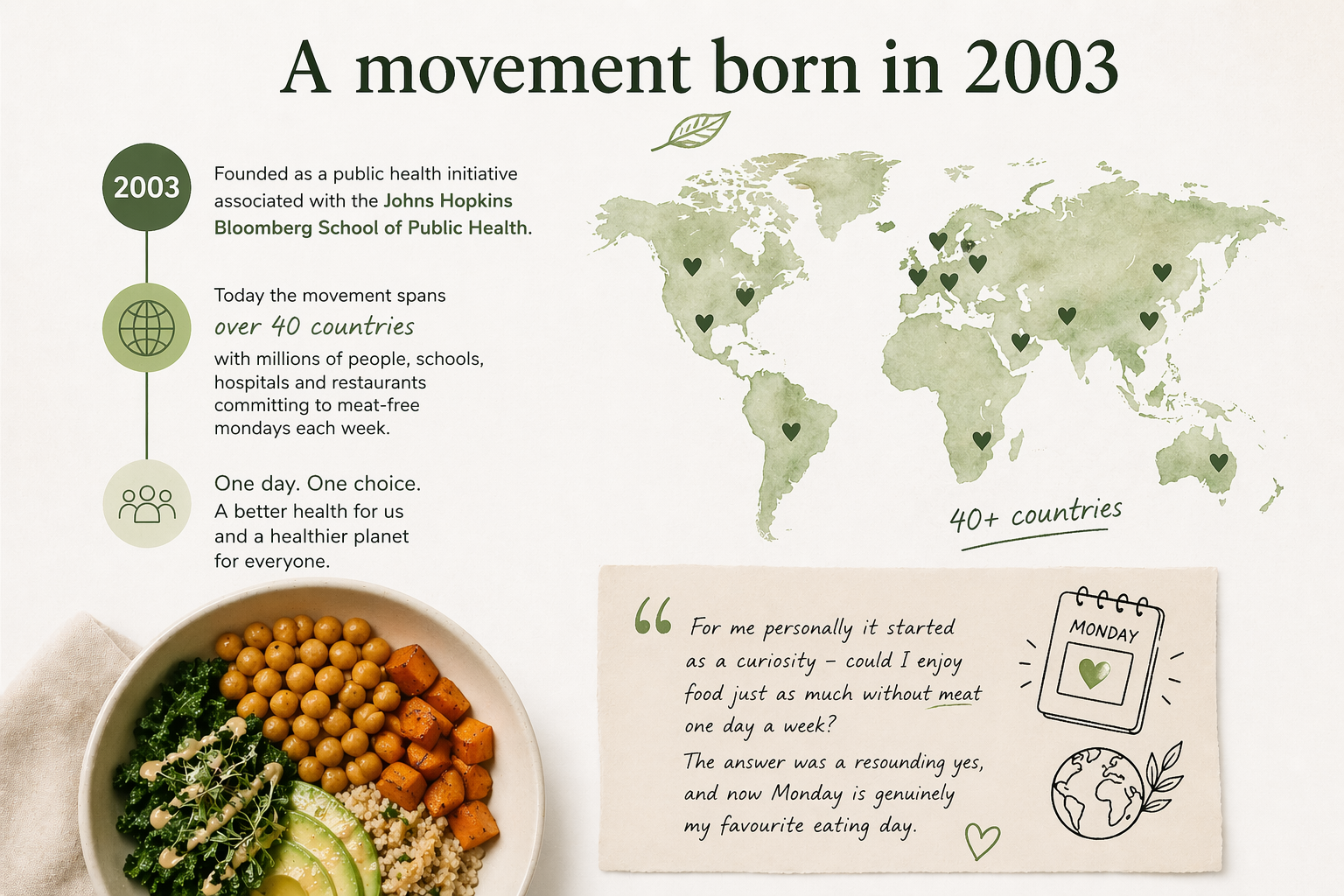
A movement born in 2003

No Meat Monday was founded in 2003 as a public health initiative associated with the Johns Hopkins Bloomberg School of Public Health. The idea was simple: by reducing meat consumption by just one-seventh, individuals and families could make a measurable difference to their own health and to the environment.

Today the movement spans over 40 countries, with millions of people, schools, hospitals and restaurants committing to meat-free Mondays each week.

For me personally it started as a curiosity — could I enjoy food just as much without meat one day a week? The answer was a resounding yes, and now Monday is genuinely my favourite eating day.
The Environment

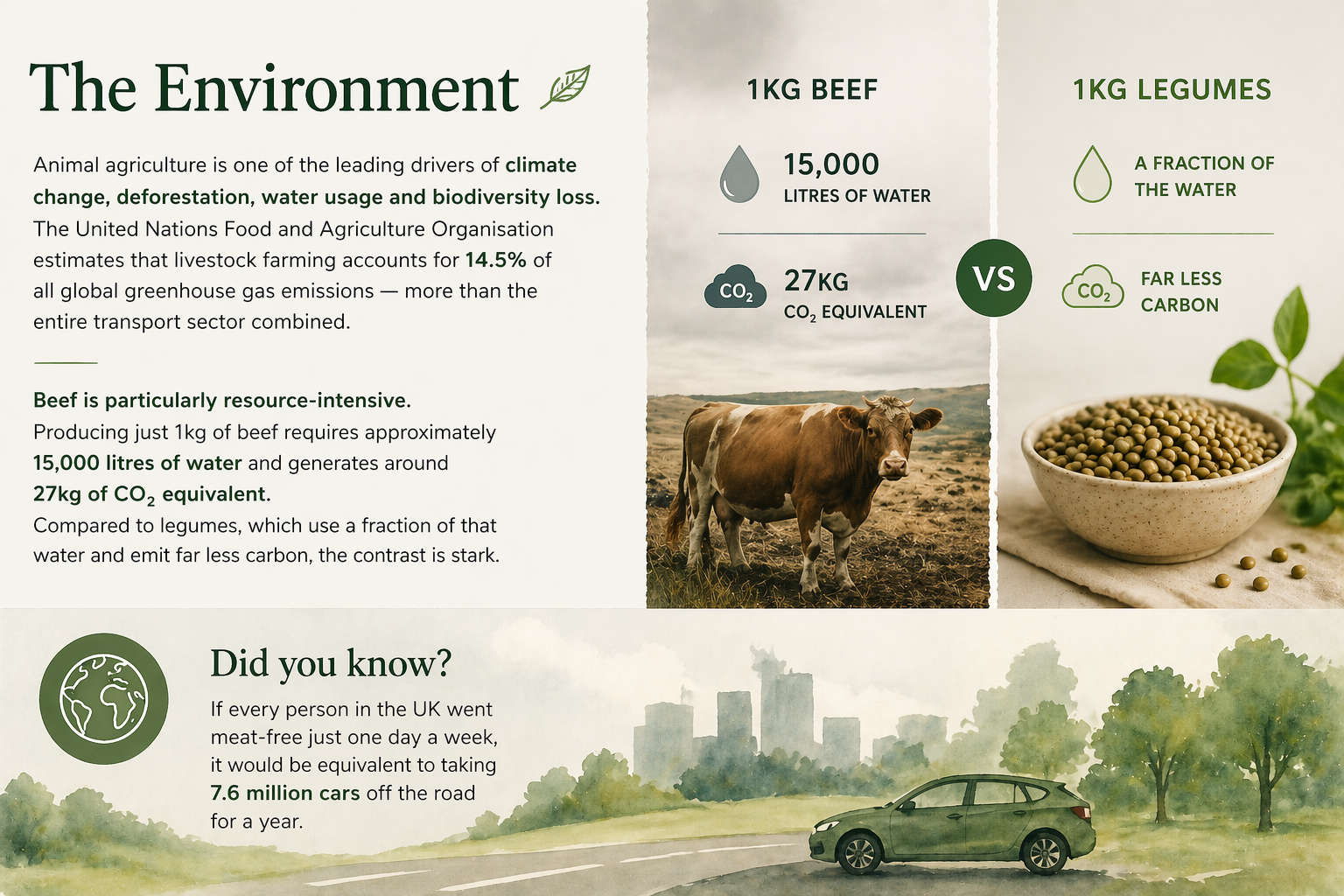
Animal agriculture is one of the leading drivers of climate change, deforestation, water usage and biodiversity loss. The United Nations Food and Agriculture Organisation estimates that livestock farming accounts for 14.5% of all global greenhouse gas emissions — more than the entire transport sector combined.

Beef is particularly resource-intensive. Producing just 1kg of beef requires approximately 15,000 litres of water and generates around 27kg of CO₂ equivalent. Compared to legumes, which use a fraction of that water and emit far less carbon, the contrast is stark.

🌍
Did you know?

If every person in the UK went meat-free just one day a week, it would be equivalent to taking 7.6 million cars off the road for a year.

The Environment
Your Health

Your Health

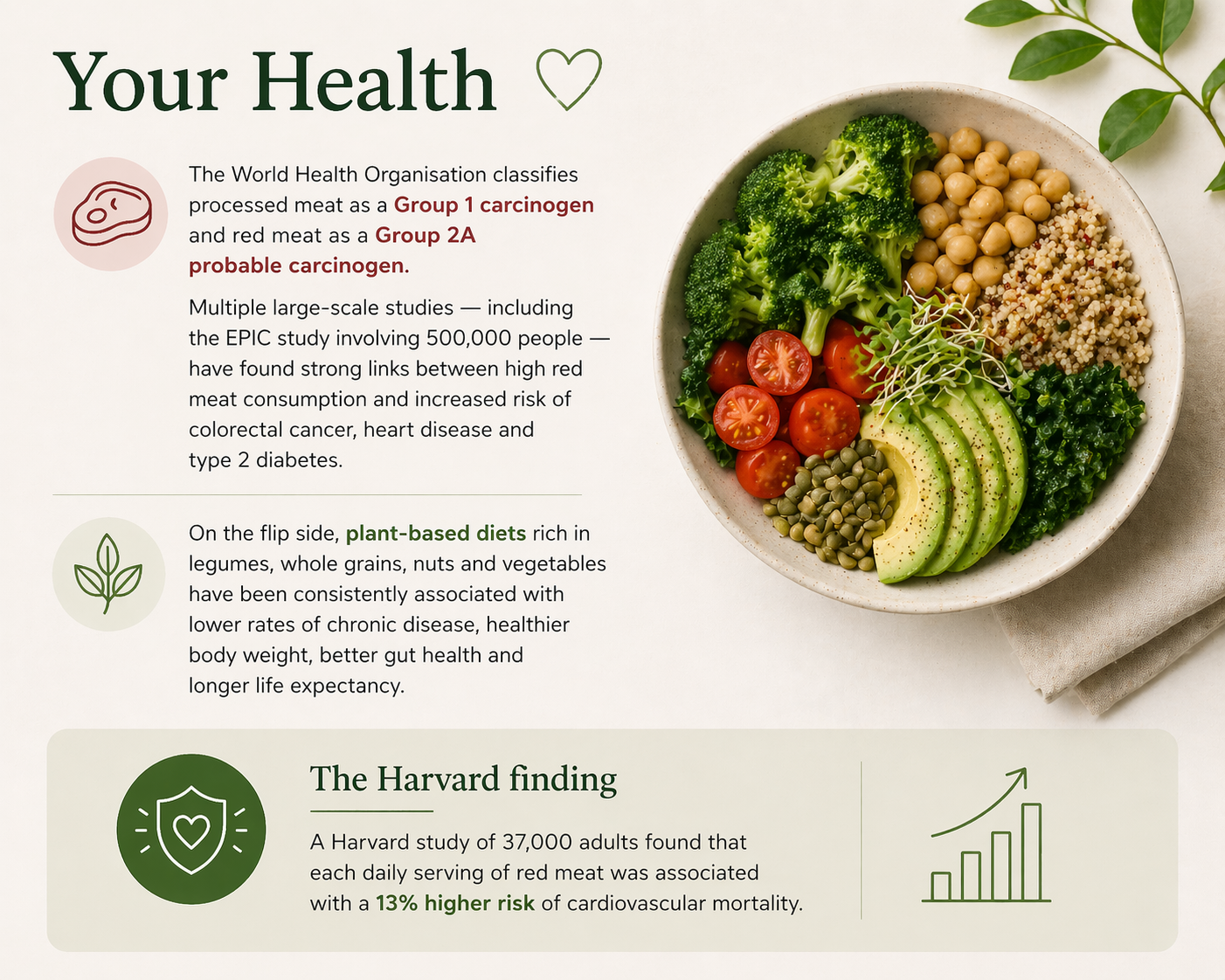
The World Health Organisation classifies processed meat as a Group 1 carcinogen and red meat as a Group 2A probable carcinogen. Multiple large-scale studies — including the EPIC study involving 500,000 people — have found strong links between high red meat consumption and increased risk of colorectal cancer, heart disease and type 2 diabetes.

On the flip side, plant-based diets rich in legumes, whole grains, nuts and vegetables have been consistently associated with lower rates of chronic disease, healthier body weight, better gut health and longer life expectancy.

❤️
The Harvard finding

A Harvard study of 37,000 adults found that each daily serving of red meat was associated with a 13% higher risk of cardiovascular mortality.

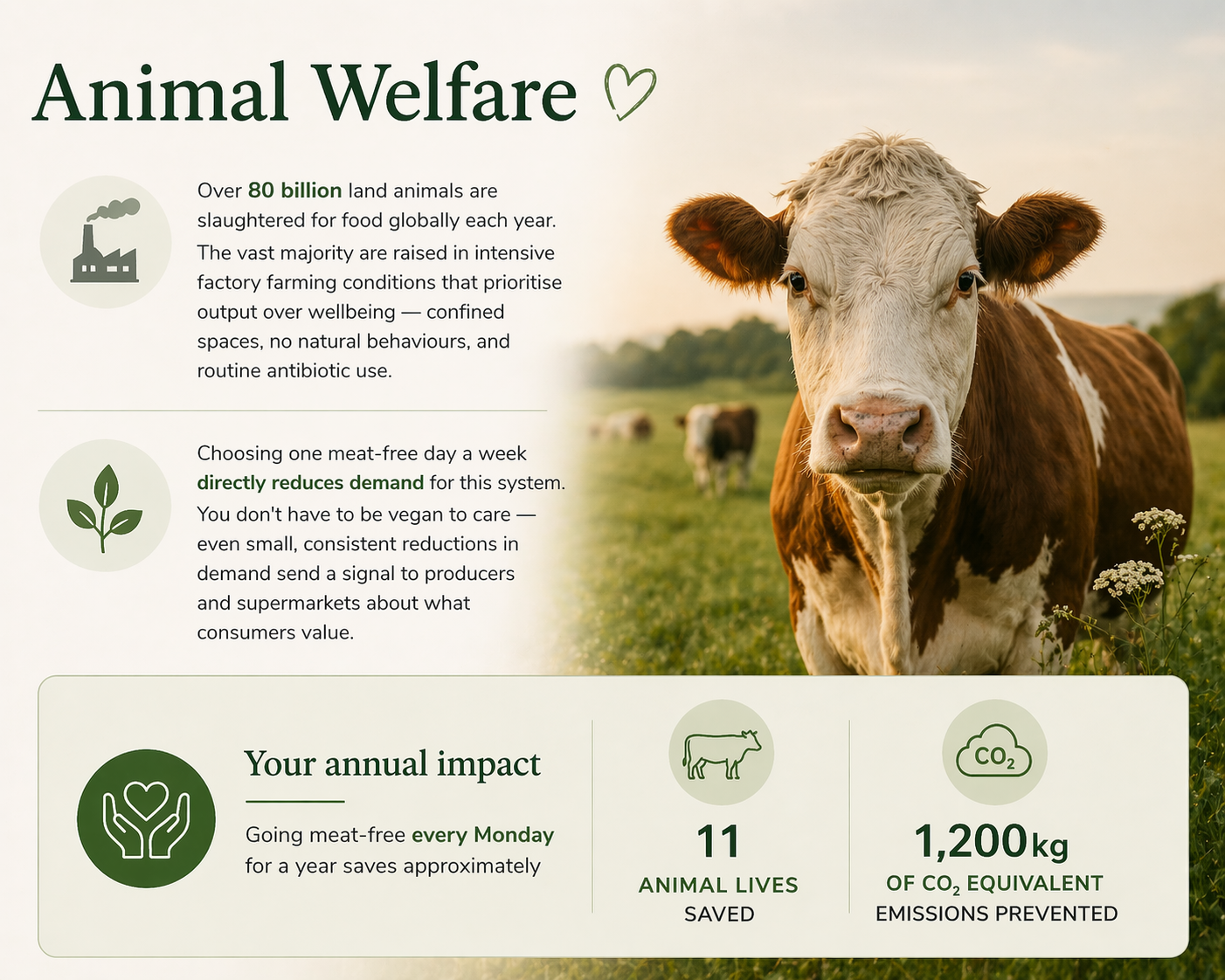
Animal Welfare

Over 80 billion land animals are slaughtered for food globally each year. The vast majority are raised in intensive factory farming conditions that prioritise output over wellbeing — confined spaces, no natural behaviours, and routine antibiotic use.

Choosing one meat-free day a week directly reduces demand for this system. You don't have to be vegan to care — even small, consistent reductions in demand send a signal to producers and supermarkets about what consumers value.

🐄
Your annual impact

Going meat-free every Monday for a year saves approximately 11 animal lives and prevents around 1,200kg of CO₂ equivalent emissions per person.

Animal Welfare

The impact adds up

What happens when a whole year of meat-free Mondays adds up for one person.

52
Meat-free days per year
~11
Animal lives spared
1,200kg
CO₂ emissions avoided
£500+
Potential annual savings

How to get started

You don't need to overhaul your diet. Just try one Monday.

1️⃣

Pick a recipe

Browse the recipe collection and choose something that sounds good to you. Keep it simple — a one-pot curry or a bowl of pasta is perfect for a Monday.

2️⃣

Shop at the weekend

Grab your ingredients Saturday or Sunday. Most plant-based meals use pantry staples — lentils, tinned tomatoes, chickpeas — so shopping is quick and cheap.

3️⃣

Cook and enjoy

Monday evening, cook your recipe. Take your time, enjoy the process. Then sit down, eat well, and feel good about what's on your plate.

Convinced? Start with a recipe.

Browse all my Monday recipes — from quick 20-minute suppers to slow-cooked weekend feasts.

See All Recipes